
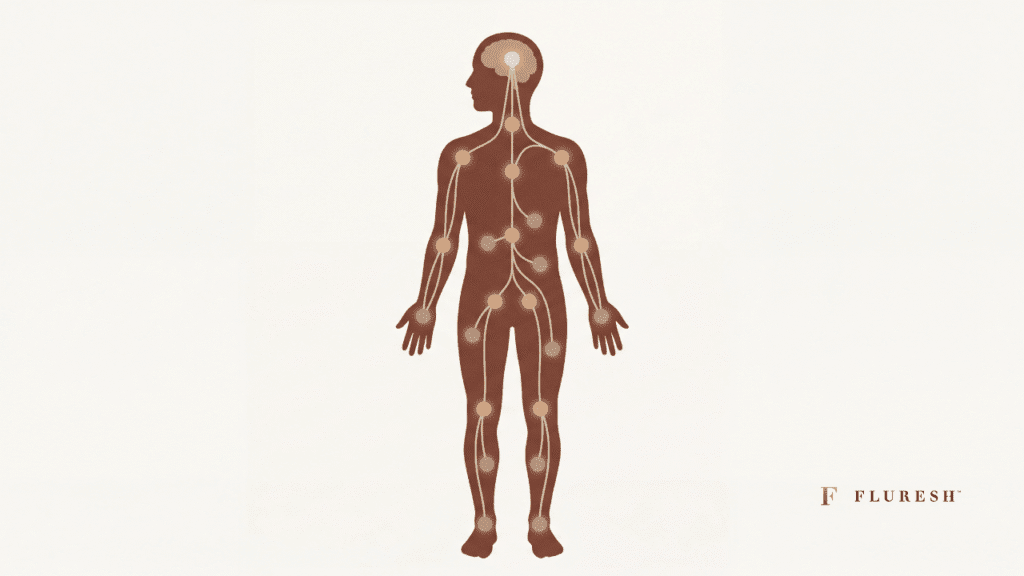
If you’ve ever wondered why cannabis affects people differently, or why some products seem to work better than others, the answer lies in your biology. Specifically, it lives in a system most people have never heard of: the endocannabinoid system.
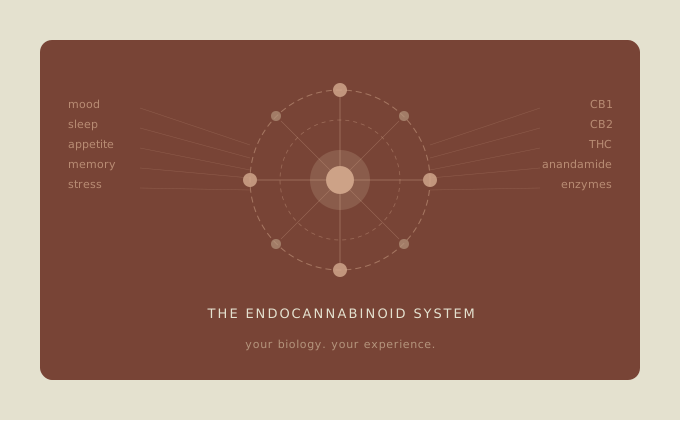
Understanding it doesn’t require a science degree. But knowing the basics can genuinely change how you approach cannabis, from which products you choose to how you think about dosing.
What Is the Endocannabinoid System?
The endocannabinoid system, often called the ECS, is a biological signaling network found in every mammal. It was discovered in the early 1990s by researchers studying how THC interacts with the human body. What they found was a sophisticated system of receptors, molecules, and enzymes already present in the body, long before cannabis entered the picture.
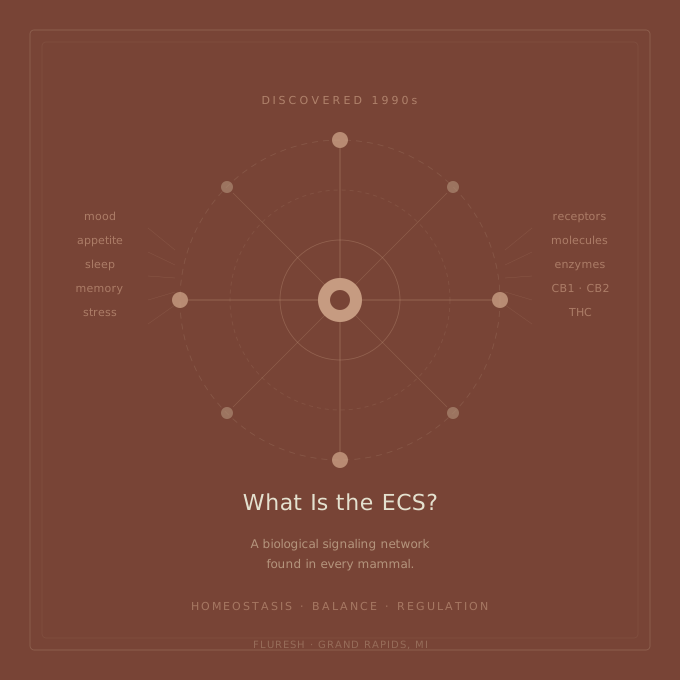
The ECS plays a role in regulating a wide range of functions, including mood, appetite, sleep, memory, and the body’s response to stress. Its primary job is maintaining homeostasis, meaning the internal balance your body is constantly working to keep.
The Three Main Components of the ECS
The endocannabinoid system is built around three core elements that work together in a continuous feedback loop.
Endocannabinoids

These are molecules your body produces on its own. The two best studied are anandamide and 2-AG. Anandamide is sometimes called the “bliss molecule” because of its role in mood regulation. Your body produces these on demand, using them to send signals from cell to cell and then breaking them down once the job is done.
Receptors

Endocannabinoids bind to receptors distributed throughout the body. The two primary receptors are CB1 and CB2. CB1 receptors are concentrated in the brain and central nervous system and are responsible for most of the psychoactive effects of THC. CB2 receptors are found primarily in the immune system and peripheral tissues and are more involved in inflammation and immune response.
Enzymes

Once endocannabinoids have completed their signaling task, enzymes break them down to prevent overactivation. This keeps the system in balance and ensures signals don’t linger longer than needed.
How Cannabis Interacts With the Endocannabinoid System
Cannabis contains compounds called phytocannabinoids, the most well-known being THC and CBD. These compounds interact with the ECS in different ways, which is why THC and CBD produce such different effects.
How THC Works
THC binds directly to CB1 receptors, mimicking anandamide. Because THC is more potent than the body’s own endocannabinoids and takes longer to break down, the effects are stronger and more prolonged. This direct binding is responsible for the psychoactive experience cannabis is best known for.
How CBD Works
CBD doesn’t bind directly to CB1 or CB2 receptors. Instead, it appears to influence how the body’s own endocannabinoids are processed, potentially slowing the breakdown of anandamide and allowing it to stay active longer. CBD also interacts with other receptors outside the ECS, which may explain some of its reported effects on stress and physical comfort.
Why This Matters When You’re Shopping for Cannabis

Understanding the ECS helps explain why THC percentage alone is a limited way to evaluate a cannabis product. Two products with the same THC level can feel very different depending on their full cannabinoid and terpene profiles. Terpenes, the aromatic compounds in cannabis, appear to interact with the ECS and other receptor systems, shaping the overall experience.
This is sometimes called the “entourage effect,” a term used to describe how cannabinoids and terpenes may work together to produce effects that neither could produce alone.
At Fluresh, the Cannabis Advisers are trained to help you navigate products with this in mind. Rather than pointing you toward the highest THC percentage, they’ll ask about the experience you’re looking for and recommend products based on the full profile. It’s how the Carbon by Fluresh line was built: terpene-forward flower and concentrates designed to deliver a specific, high-quality experience.
Why Does Everyone Respond to Cannabis Differently?
The short answer is that everyone’s ECS is slightly different. The density and distribution of CB1 and CB2 receptors vary between individuals. Genetics, lifestyle, previous cannabis use, and overall health all play a role in how your system processes cannabinoids.
This is why a dose that feels mild to one person can feel overwhelming to another. It’s also why the most reliable way to find your ideal product and dose is to start low, go slow, and pay attention to how you respond.
The ECS and Different Cannabis Products
Different consumption methods reach the ECS at varying rates and through different pathways.
Inhaled products, such as flower, pre-rolls, and vape carts, deliver cannabinoids quickly through the lungs. Effects are typically felt within minutes. Edibles are processed through the digestive system, which converts THC into a compound called 11-hydroxy-THC. This form crosses the blood-brain barrier more efficiently and tends to produce a different, often longer-lasting, and more full-body experience.
Knowing how your consumption method interacts with your ECS helps you set realistic expectations and dose more accurately.
Check out Cannabis Products from Fluresh and feed your Endocannabinoid System!
Frequently Asked Questions About the Endocannabinoid System
Yes. Every mammal has an endocannabinoid system, including humans. It’s a fundamental part of how the nervous and immune systems communicate and regulate themselves.
Some researchers have proposed a concept called “clinical endocannabinoid deficiency,” suggesting that low endocannabinoid activity may be connected to certain conditions. This is still an active area of research and not a clinical diagnosis. Consult a healthcare provider for any health-related questions.
Yes, though differently from THC. CBD’s interaction with the ECS is more indirect, and researchers are still studying the full scope of its effects. It does not produce the psychoactive effects that come from THC’s direct binding to CB1 receptors.
When you inhale cannabis, THC reaches your bloodstream quickly and binds to CB1 receptors in the brain. With edibles, THC is metabolized by the liver into 11-hydroxy-THC before reaching the brain. This metabolite is more potent at crossing the blood-brain barrier, which is why edible effects are often described as stronger and more full-body than those from inhaled products.