
Disclaimer: Fluresh is a licensed cannabis retailer, not a law firm. This post is for educational purposes only and should not be taken as legal advice. Cannabis laws change frequently at the state and local level. Always confirm current regulations through official state resources or consult a qualified attorney before making compliance decisions.
Michigan voters approved the legalization of recreational cannabis back in November 2018, making the state the first in the Midwest to legalize cannabis for adult use. Since then, the regulatory landscape has continued to evolve. New taxes, updated licensing structures, and shifting enforcement priorities mean that what was true about Michigan cannabis laws two years ago may not be accurate today.
This guide covers the essentials as they stand in 2026. We’ll walk through possession limits, home cultivation rules, medical cannabis access, business licensing, taxes, and the things that remain illegal under state law. If you’re a Michigan resident or someone visiting Grand Rapids and wondering what the rules actually look like on the ground, this is a good place to start.
How Cannabis Became Legal in Michigan
Michigan’s path to legalization happened in two stages. In 2008, voters passed the Michigan Medical Marihuana Act (MMMA), creating a medical marijuana program that allowed qualifying patients and caregivers to possess and cultivate cannabis for medical purposes. That made Michigan the 13th state in the country to enact medical cannabis protections.
A decade later, on November 6, 2018, Michigan voters approved the Michigan Regulation and Taxation of Marihuana Act (MRTMA), which legalized the possession, cultivation, and use of cannabis for adults 21 years of age and older. The law went into effect on December 6, 2018, and the first recreational cannabis sales in the state began in late 2019. The Cannabis Regulatory Agency (CRA), formerly known as the Marijuana Regulatory Agency, oversees all licensing, enforcement, and regulatory affairs for both medical and adult-use cannabis statewide.
At Fluresh, Grand Rapids’ first recreational cannabis store, we’ve been part of this story from the start. Fluresh was founded in 2018, opened for medical sales in February 2020, and became the first cannabis retailer in Grand Rapids to offer recreational sales on October 23, 2020. That’s why staying current on Michigan cannabis laws matters to us. We watch the rules closely so our team can help customers understand what’s changing and what it means the next time they place an order.
What You Can Legally Possess in Michigan
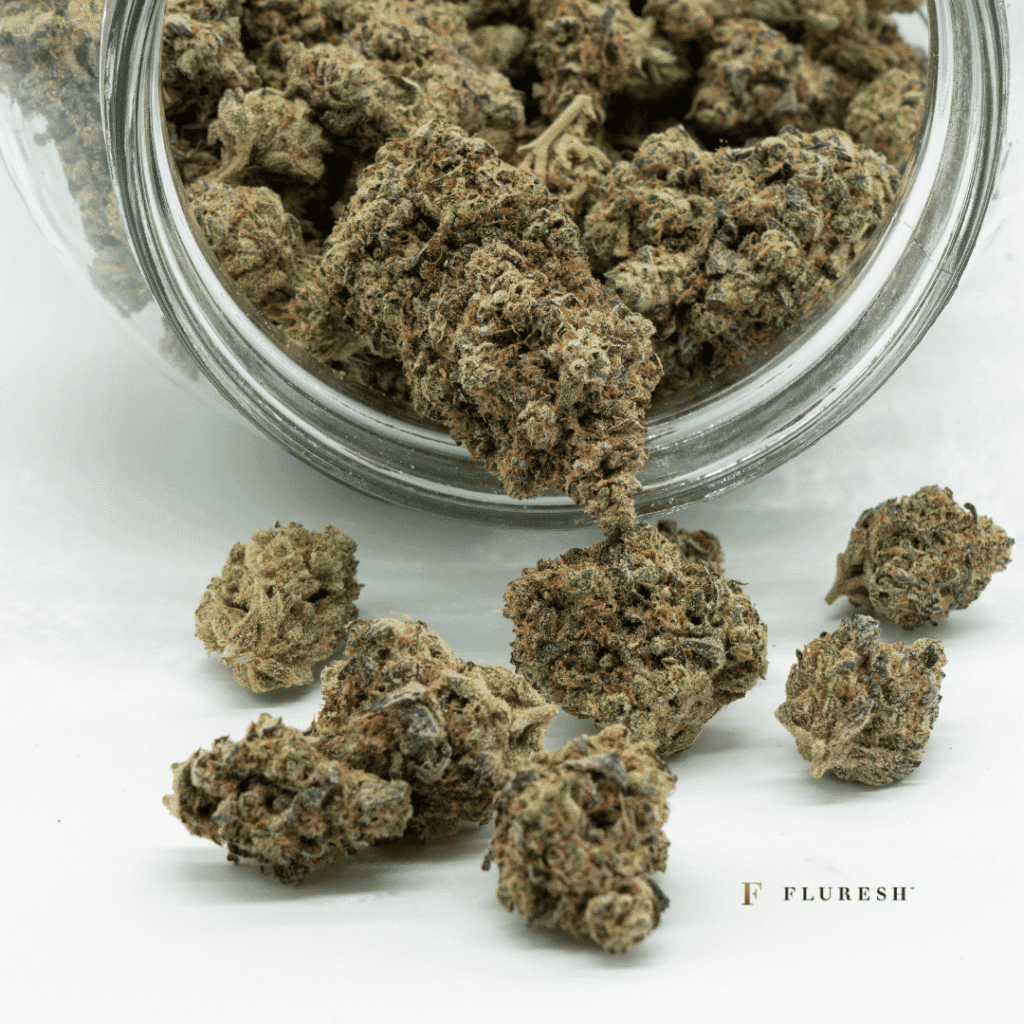
Under the MRTMA, adults 21 years of age and older can legally possess cannabis in Michigan under the following limits.
- In public, you may carry up to 2.5 ounces of cannabis, with no more than 15 grams of marijuana concentrate included in that amount.
- At home, you can possess up to 10 ounces of cannabis. Any amount over 2.5 ounces must be stored in a container or area equipped with locks or other functioning security devices that restrict access to its contents.
Cannabis possession by anyone under 21 years of age remains illegal under state law outside of the medical marijuana program.
Home Cultivation Rules
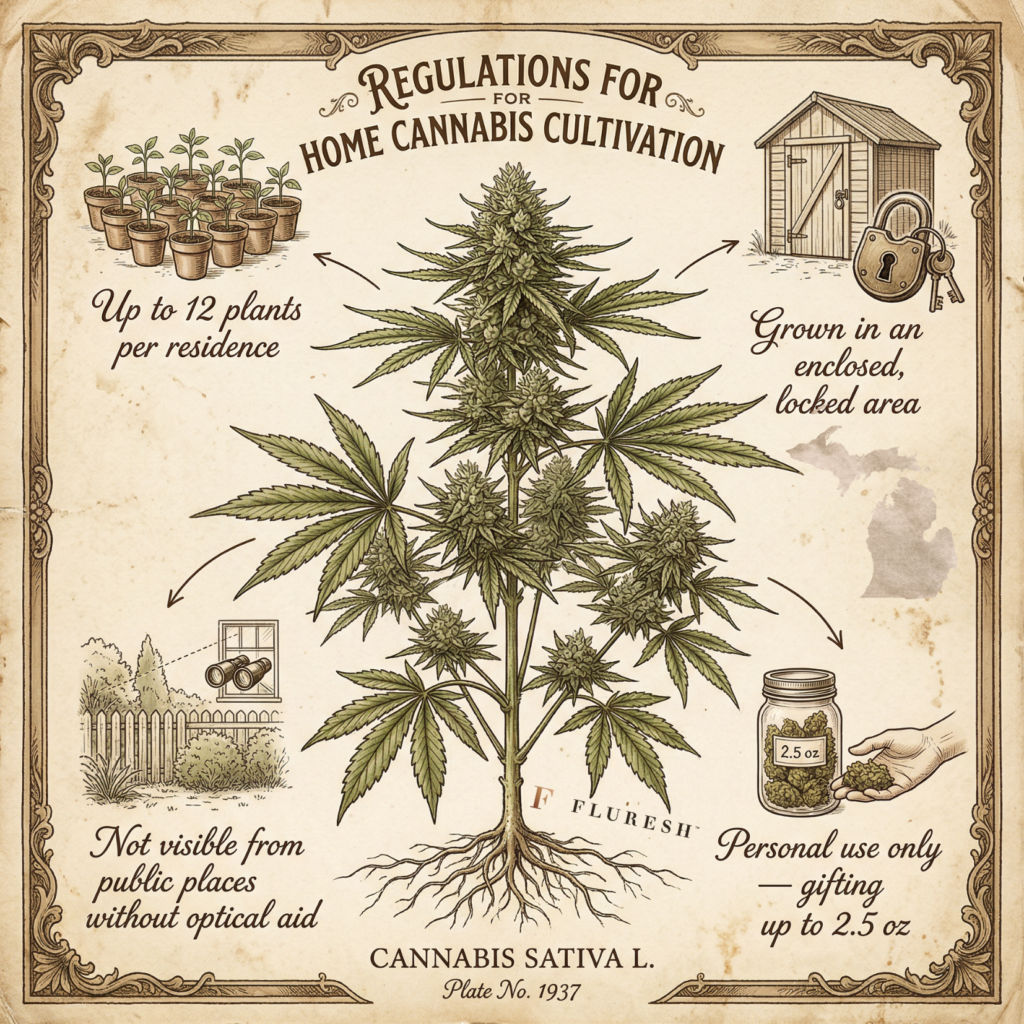
Michigan law allows adults 21 and older to cultivate up to 12 plants per residence for personal use.
The key restrictions are straightforward. Plants must be grown in an enclosed area equipped with locks or other functioning security devices. Plants must not be visible from a public place without the use of binoculars, aircraft, or other optical aids. In other words, your grow cannot be out in the open where plants are visible to passersby.
Home-grown cannabis is for personal use only. You cannot sell it! However, Michigan law does allow adults to gift up to 2.5 ounces of marihuana and marihuana accessories to another adult, as long as the transfer isn’t promoted or advertised commercially.
Michigan’s Medical Cannabis Program
The medical marijuana program established under the MMMA remains active alongside the adult-use market. Registered patients may possess up to 2.5 ounces of usable marijuana and can purchase up to 2.5 ounces per transaction, not exceeding 10 ounces per month from a licensed medical provisioning center.
Caregivers registered through the program may assist up to five patients. Each caregiver can possess up to 2.5 ounces per patient and cultivate up to 12 plants per patient. A caregiver who is also a registered patient could theoretically cultivate up to 72 plants total, though all plants must be kept in a locked, enclosed area.
The number of registered patients has declined significantly since recreational legalization, but the program still provides meaningful access to cannabis for patients with qualifying conditions, including protections related to the regulation of medical use not available to recreational consumers.
Cannabis Business Licensing in Michigan
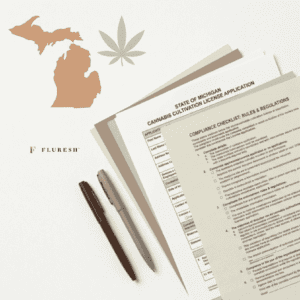
Michigan licenses both adult-use and medical cannabis businesses through the Cannabis Regulatory Agency. License types include growers, processors, retailers, microbusinesses, secure transporters, and safety compliance facilities. Each licensee must meet specific requirements around facility standards, security, record-keeping, and testing compliance.
One important detail that often gets overlooked is that municipalities in Michigan have significant control over cannabis operations within their borders. Local governments can limit or outright ban certain types of marihuana establishments. They can also regulate the time, place, and manner of cannabis business operations and decide whether to allow on-site consumption lounges or temporary cannabis events. This is part of why access to cannabis varies so much from one Michigan city to the next.
As of late 2025, more than 2,200 cannabis businesses are licensed statewide, and over 39,000 cannabis workers are registered with the state. The industry has grown rapidly, though Michigan has also experienced significant oversupply in recent years, creating pricing pressures across the market. The Michigan Cannabis Industry Association has been vocal about the challenges facing operators, particularly smaller businesses navigating thin margins.
The Medical Marihuana Facilities Licensing Act (2016 PA 281) established the licensing framework for commercial medical facilities, while the MRTMA governs adult-use licensing. Both frameworks are administered by the CRA, which has the authority to promulgate rules governing operations, testing standards, and compliance. The Michigan Legislature continues to consider new legislation that could further shape how cannabis businesses operate a marihuana establishment in the state.
Cannabis Taxes and the 2026 Wholesale Tax
Taxes on cannabis in Michigan changed significantly at the start of 2026. Here’s what the current tax structure looks like for adult-use cannabis sales.
The existing 10% retail excise tax on recreational marijuana remains in place. The standard Michigan sales tax still applies. On top of those, a new 24% wholesale cannabis tax took effect on January 1, 2026, under HB 4951. This wholesale excise tax applies to adult-use cannabis products transferred from licensed growers or processors to retailers. It does not appear as a separate line item on your receipt, but it does increase costs earlier in the supply chain, which can affect retail pricing.
The Michigan Cannabis Industry Association challenged the tax in court, arguing the move was enacted without a proper vote of the Michigan Legislature. The court ruled the tax could stand, and Governor Gretchen Whitmer signed an $81 billion state budget built around the projected revenue. The taxes imposed under this act are expected to generate approximately $420 million annually, with funds directed primarily toward road infrastructure through the Department of Treasury.
Medical cannabis sales are not subject to the excise tax, which remains one incentive for patients to maintain their medical registration.
What’s Still Illegal Under Michigan Cannabis Law
Even with legalization, there are clear boundaries. It is illegal to consume cannabis in public places, except in specifically licensed consumption areas or temporary events authorized by the local government.
Driving under the influence of cannabis is illegal under Michigan’s impaired driving laws, and penalties can be severe. Consuming cannabis on federal land, including buildings, parks, and universities that receive federal funding, remains prohibited because marijuana is still classified as a Schedule I substance under federal law (though a federal rescheduling process is underway as of early 2026).
Selling cannabis without a license is a serious offense. The penalties for unlicensed cultivation, distribution, or display of marihuana vary by weight and circumstance but can include up to 15 years imprisonment and significant fines. Even minor violations, like possession by someone under 21, can result in fines and days in jail. Cannabis use is also prohibited on or near the grounds of a public or private school serving grades 1 through 12.
Private property owners and employers retain the right to restrict or prohibit cannabis use on their premises or within their employment policies. Michigan’s legalization law does not protect workers from being fired or not hired for off-duty cannabis use, though the state did drop cannabis from pre-employment drug testing for most non-test-designated state jobs in 2023. The Administrative Procedures Act and related state rules govern the implementation and enforcement of these policies.
Federal Rescheduling and What It Means for Michigan
In December 2025, Trump signed an executive order directing the federal government to complete the process of rescheduling marijuana from Schedule I to Schedule III. The change is important, but it is not yet final.
Within 24 hours of the announcement, the Cannabis Regulatory Agency reiterated that state enforcement and compliance expectations remain unchanged until a final federal rule is issued. Rescheduling would not legalize cannabis federally, but it could open the door to banking access for cannabis businesses, remove certain tax penalties (particularly under IRS Section 280E), and support more robust clinical research.
For now, Michigan’s regulatory framework operates independently of federal scheduling. Licensed businesses like Fluresh continue to operate under state law and CRA oversight. Organizations like NORML continue to track federal developments and advocate for broader reform. If and when federal rules change, the CRA is expected to issue guidance on how those changes intersect with Michigan’s existing cannabis laws.
How Fluresh Fits Into Michigan’s Legal Cannabis Landscape
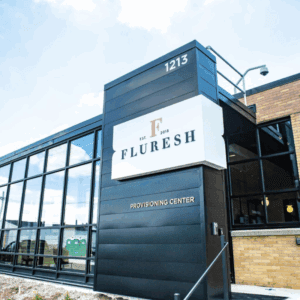
Fluresh operates as a fully licensed cannabis retailer under Michigan law, and our parent company Tend.Harvest.Cultivate. (T.H.C.) is vertically integrated, meaning we cultivate, process, and sell cannabis all under one roof. Our flower is grown on-site at our facility on Phillips Ave in Grand Rapids, and our house brands, including Carbon by Fluresh, Mr. X, and newfrend, are produced by T.H.C.
We’re proud to be part of Michigan’s legal cannabis market and to operate within the regulatory framework that makes safe, tested, and transparent access to cannabis possible for the Grand Rapids community.
If you have questions about products, potency, or how to navigate the menu as a first-time buyer, our Cannabis Advisers are here to help. You can browse our full menu online, order through the Fluresh app, or call us at 616-208-9934.

We’re open Tuesday through Saturday, 9 AM to 9 PM, for curbside pickup at 1213 Phillips Ave SW. Order online for curbside pickup or call us at 616-208-9934.
Frequently Asked Questions About Michigan Cannabis Laws
Yes. Michigan voters approved the Michigan Regulation and Taxation of Marihuana Act in 2018, and recreational cannabis sales began in late 2019. Adults 21 and older can legally purchase, possess, and consume cannabis within the limits set by state law.
You can possess up to 2.5 ounces of marihuana in public, with up to 15 grams of marijuana concentrate as part of that amount. At home, you can store up to 10 ounces of cannabis, with anything over 2.5 ounces kept in a locked area that restricts access.
Yes. Michigan allows adults to cultivate up to 12 plants per residence. Plants must be kept in an enclosed area with functioning security devices, and they cannot be visible from a public place.
As of 2026, adult-use cannabis is subject to a 10% retail excise tax, standard Michigan sales tax, and a new 24% wholesale cannabis tax that took effect on January 1. The wholesale tax is applied earlier in the supply chain and may be reflected in retail pricing. Medical cannabis purchases are exempt from the excise tax.
Generally, no. Public consumption is prohibited except in locally authorized consumption lounges or temporary events. It is also illegal to consume cannabis while driving or on federal property.
Yes. Michigan’s legalization law does not include employment protections for off-duty cannabis use. Employers may set their own workplace drug policies, including pre-employment testing for certain positions.
Fluresh is a fully licensed cannabis retailer in Grand Rapids, operating under Michigan’s Cannabis Regulatory Agency. Our parent company, Tend.Harvest.Cultivate holds cultivation and processing licenses, making us a vertically integrated operation. We comply with all state requirements for testing, labeling, and retail sales.
This post was last reviewed in February 2026. Michigan cannabis laws are subject to change. For the most current information, visit the Michigan Legislature website or the Cannabis Regulatory Agency. Nothing in this post should be interpreted as legal advice.